

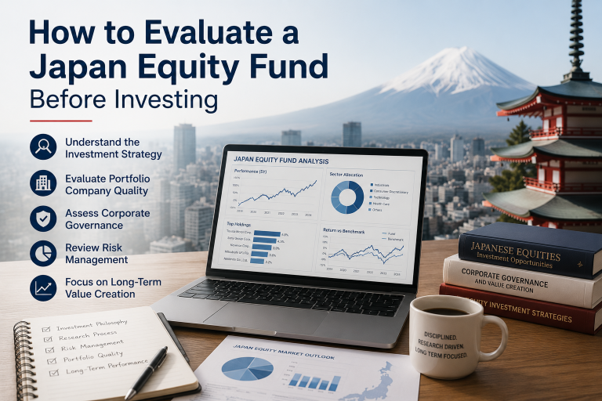
Investing in Japanese equities can provide long-term opportunities, but selecting the right japan equity fund requires more than reviewing historical returns. Every fund has a different investment philosophy, portfolio construction process, and approach to managing risk. Understanding these differences helps investors make informed decisions that align with their long-term objectives.
Rather than focusing on short-term market performance, experienced investors evaluate how a fund identifies opportunities, manages risk, and builds a portfolio capable of delivering sustainable returns. Looking beyond performance figures provides a clearer picture of whether a fund is positioned for long-term success.
Why Choosing the Right Japan Equity Fund Matters
Japan’s equity market has changed significantly over recent years, supported by corporate governance reforms, improving shareholder returns, and stronger capital allocation practices. These developments have created new opportunities for active investors, but not every fund approaches the market in the same way.
A well-managed fund follows a disciplined investment process rather than reacting to short-term market movements. Evaluating that process allows investors to understand how decisions are made and whether the fund’s strategy is designed to create long-term value.
Understand the Fund’s Investment Philosophy
Every investment fund is built around a philosophy that guides how companies are selected and managed. This philosophy influences every investment decision, from identifying potential opportunities to determining when a company should be added or removed from the portfolio.
Strong equity investment strategies are generally built around a consistent framework rather than changing with market sentiment. Before investing, it is worth understanding whether the fund focuses on business quality, valuation, growth potential, or a combination of these factors.
A well-defined investment philosophy should clearly explain:
- How companies are selected
- The characteristics of preferred investments
- The long-term investment horizon
- The role of valuation in decision-making
- The approach to portfolio management
A consistent philosophy often leads to more disciplined investment decisions across different market environments.
Evaluate the Quality of Portfolio Companies
The long-term performance of a japan equity fund ultimately depends on the quality of the businesses it owns. Instead of concentrating solely on recent share price performance, investors should assess whether portfolio companies possess strong fundamentals capable of supporting sustainable growth.
High-quality businesses generally demonstrate financial strength, resilient business models, and experienced management teams. These characteristics often allow companies to perform more consistently during periods of economic uncertainty.
Key Characteristics to Look For
When reviewing portfolio holdings, investors should consider whether companies demonstrate:
- Strong balance sheets
- Healthy cash flow generation
- Sustainable earnings growth
- Competitive market positions
- Experienced leadership teams
- Effective capital allocation
Companies with these qualities are often better positioned to create long-term shareholder value.
Review the Research Process
Successful investing begins with thorough research. A disciplined research process enables investment managers to understand both the opportunities and risks associated with every potential investment before making portfolio decisions.
Rather than relying on market trends or short-term momentum, experienced managers evaluate companies from multiple perspectives to determine their long-term potential.
A Comprehensive Research Process Often Includes
- Financial statement analysis
- Industry and market research
- Business model evaluation
- Competitive positioning
- Management assessment
- Company valuation
Combining these areas of research provides a more complete understanding of a company’s strengths and future prospects.
Assess Corporate Governance
Corporate governance has become an increasingly important consideration within Japan’s equity market. Businesses that maintain high governance standards often demonstrate greater transparency, stronger accountability, and more disciplined capital allocation.
Investors increasingly examine how management teams make strategic decisions and whether those decisions are aligned with shareholder interests. Governance also provides valuable insight into how companies manage resources and respond to changing market conditions.
Strong governance practices often include independent board oversight, clear executive accountability, transparent reporting, and thoughtful long-term planning. These qualities can contribute to more sustainable business performance over time.
Understand How Risk Is Managed
Every investment involves risk, making effective risk management a critical component of successful investing. While market volatility cannot be avoided, disciplined investment managers seek to understand and manage the underlying risks associated with individual companies and portfolio construction.
Risk management extends beyond monitoring share prices. It also involves assessing business quality, financial strength, industry exposure, and portfolio diversification to reduce unnecessary risks without limiting long-term growth potential.
Important Risk Factors to Consider
A comprehensive investment process should evaluate:
- Portfolio diversification
- Company fundamentals
- Financial leverage
- Liquidity position
- Sector concentration
- Valuation discipline
Managing these factors helps create a portfolio capable of navigating different market conditions.
Why Long-Term Thinking Matters
One of the defining characteristics of successful investing is patience. Short-term market movements are often influenced by economic events, investor sentiment, and temporary uncertainty. Long-term investment decisions, however, are driven by business fundamentals and value creation.
Well-designed equity investment strategies maintain consistency throughout changing market cycles rather than reacting to short-term volatility. By focusing on company quality, financial discipline, and sustainable growth, investors are better positioned to benefit from long-term opportunities within Japan’s equity market.
This disciplined approach also allows investment managers to identify businesses capable of generating value over many years rather than chasing short-term market trends.
Questions to Ask Before Investing
Before selecting a japan equity fund, investors should take time to evaluate the investment process and understand how the portfolio is managed.
Some useful questions include:
- What investment philosophy guides portfolio decisions?
- How are companies selected?
- What research supports each investment decision?
- How is portfolio risk managed?
- What industries receive the greatest allocation?
- How frequently is the portfolio reviewed?
The answers to these questions provide valuable insight into the quality and consistency of the investment process.
Conclusion
Choosing the right japan equity fund requires a thorough understanding of much more than historical performance. Investors should evaluate investment philosophy, company quality, governance standards, research methodology, and risk management before making a long-term commitment.
Funds supported by disciplined equity investment strategies are typically better positioned to identify quality businesses, manage market uncertainty, and create sustainable shareholder value over time. By taking a research-driven approach and focusing on long-term fundamentals, investors can make more informed decisions while gaining exposure to the opportunities available in Japan’s evolving equity market.